
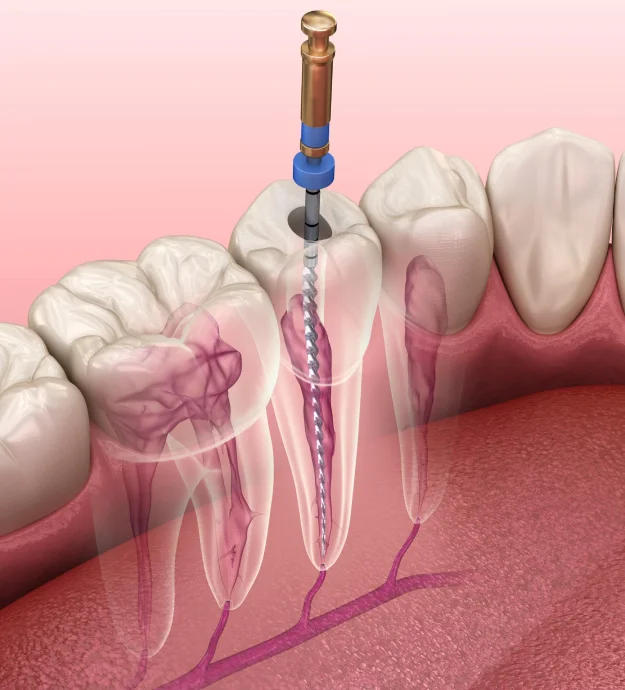
Advanced Surgical Care to Help Preserve Natural Teeth
Endodontic surgery is a specialized treatment used to diagnose or treat problems involving the roots of a tooth and surrounding tissues. It may be recommended when inflammation or infection remains after root canal treatment, when a root canal cannot be completed through the crown of the tooth, or when a concern requires direct access to the root.
At Lake Endo Endodontics in Huntersville, NC, endodontic surgery is performed with careful planning, advanced technology, and a focus on patient comfort. Our endodontic team evaluates the condition of the tooth, reviews available treatment options, and explains what to expect before recommending surgery. The goal of endodontic surgery is often to remove infection, address damaged root tissue, and help preserve the natural tooth whenever possible.
Request an AppointmentBenefits of Endodontic Surgery
Endodontic surgery can provide important benefits when conventional root canal treatment cannot fully address an infection or complex concern. It allows the endodontist to reach affected areas directly, remove problematic tissue, and treat the tooth with the goal of preserving its function and structure.
- Provides direct access to areas that are difficult to treat through the crown of the tooth
- Allows infected tissue near the root tip to be fully removed
- Offers a way to save a tooth that might otherwise require extraction
- Uses magnification and imaging to treat with a high degree of precision
- Addresses persistent infection even after a previous root canal has been completed
Who Is a Candidate for Endodontic Surgery?
Endodontic surgery may be considered when a tooth continues to cause pain, swelling, or infection after previous root canal treatment. It can also be recommended when dental imaging shows an abscess or infection near the root tip that has not resolved with non-surgical care.
Surgical treatment may be appropriate when canals are extremely narrow, curved, or calcified, or when an existing crown or post makes retreatment difficult. In some cases, surgery also allows the endodontist to directly examine small fractures near the root that may be difficult to diagnose otherwise.
Our Approach to Endodontic Surgery
Lake Endo Endodontics is equipped to support patients through every stage of surgical treatment, from initial evaluation to post-procedure healing. Our Huntersville team combines advanced imaging with a precise, patient-focused approach, ensuring you receive attentive care and clear guidance throughout your surgical experience.
Detailed Imaging and Planning
Cone beam imaging is used to map the exact location of infection and plan the surgical approach.
Local Anesthesia
The treatment area is fully numbed to keep the procedure comfortable from start to finish.
Accessing the Root Tip
A small opening is made in the gum tissue near the affected tooth to reach the root.
Removing Infected Tissue
Infected or inflamed tissue surrounding the root tip is carefully removed.
Root End Preparation and Sealing
The tip of the root is trimmed and sealed with a biocompatible material to prevent future infection.
Closing and Healing
The gum tissue is repositioned and closed with sutures, allowing the area to heal naturally over the following days.
Post-Surgery Recovery Care Tips
Recovery from endodontic surgery is generally straightforward, and most patients feel comfortable resuming daily activities within a short period. Mild swelling and bruising near the surgical site are common for the first 48 to 72 hours and can be managed with a cold compress applied in short intervals. Discomfort during this time is usually mild to moderate and responds well to over-the-counter or prescribed pain relief. Soft foods are recommended for the first few days while the surgical site begins to heal, helping to avoid unnecessary irritation to the area.
Most patients return to normal daily activities within a day or two, though strenuous exercise is best avoided for about a week to support proper healing. While the surface tissue typically heals within one to two weeks, full bone healing takes several months to complete. A follow-up X-ray is used to confirm that the bone is regenerating properly around the root, giving our team a clear picture of long-term healing progress.
Focused Care for Lasting Tooth Health
Persistent discomfort, swelling, or infection around a previously treated tooth should not be ignored. Endodontic surgery may provide a way to address a root-end problem and help preserve the natural tooth when appropriate. Lake Endo Endodontics can evaluate your symptoms, review available imaging, and explain whether endodontic surgery may be suitable for your situation. Call us at 704.987.9888 to schedule a consultation.
Request an AppointmentFrequently Asked Questions
About Endodontic Surgery
Endodontic surgery is used to treat infection or inflammation that persists at the tip of a tooth’s root after a root canal, particularly when the issue can’t be resolved by reopening the canal from the crown of the tooth.
An apicoectomy, also called root-end surgery, is the most common type of endodontic surgery. It involves removing the tip of the root and sealing it, though “endodontic surgery” can also refer to a few other, less common surgical procedures.
Most patients describe recovery as involving mild to moderate discomfort, similar to what’s expected after a tooth extraction, and it’s typically well managed with standard pain relief medication for a few days.
Soft tissue at the incision site generally heals within one to two weeks, while complete bone regeneration around the root tip can take several months and is confirmed through follow-up X-rays.
In most cases, no. Since the procedure accesses the root through the gum tissue rather than through the crown of the tooth, an existing crown or restoration typically doesn’t need to be replaced.
While success rates for endodontic surgery are high, if the tooth doesn’t heal as expected, extraction and tooth replacement may be discussed as the next option to restore function and prevent further infection.
For most patients, saving the natural tooth through surgery preserves better long-term function and bone structure than extraction, which often requires additional treatment such as an implant or bridge to restore the space.
This depends on factors like whether a crown or post makes reopening the canal impractical, the shape and curvature of the root, and what your imaging reveals, a detailed evaluation is the best way to determine which approach fits your specific tooth.